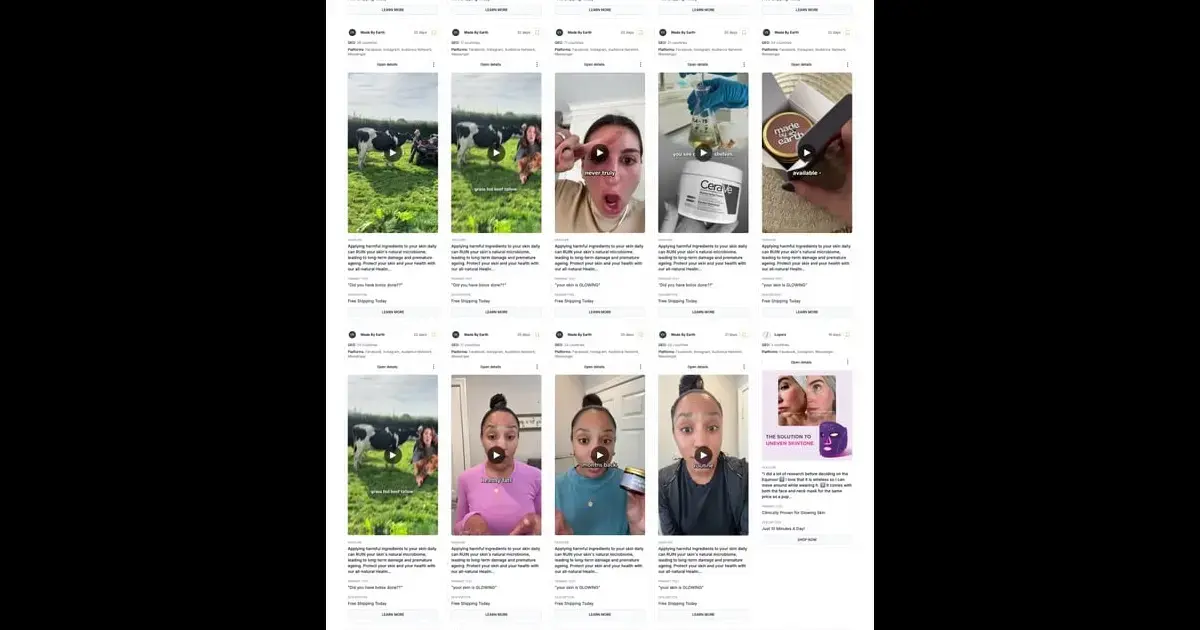
Facebook Ad Policy Compliance: How to Audit Competitor Ads and Protect Your Accounts
Getting your Facebook ad account disabled is one of the most expensive things that can happen to a media buyer. You lose active campaigns, historical data, custom audiences — and sometimes the ability to advertise on Meta entirely.
The frustrating part? Most bans stem from creative and copy decisions that could have been avoided. The compliance rules exist in Meta's documentation, but they are vague, inconsistently enforced, and constantly evolving.
There is a smarter approach: use competitive intelligence to study what actually survives Meta's moderation at scale. A facebook ad compliance audit of competitor creatives tells you which patterns, angles, and formats consistently pass review in your vertical — and which ones get flagged. This article breaks down exactly how to do it.
Why Ad Account Bans Are Spiking in 2026
Meta has significantly ramped up automated enforcement over the past 18 months. Several trends are driving the increase in bans and restrictions:
Machine learning moderation at scale. Meta's AI-powered review systems now scan ad creative, landing pages, and even post-click behavior more aggressively than before. Ads that would have run for weeks in 2024 are getting flagged within hours.
Stricter rules for regulated verticals. Health, finance, gambling, weight loss, and crypto verticals face tighter scrutiny. Even "soft" violations — like before/after imagery or income claims — trigger automated bans faster.
Account-level reputation scoring. Meta now evaluates advertisers at the account level. A history of rejected ads, even minor ones, lowers your internal trust score and increases the chance of a full account restriction.
Cross-platform enforcement. Violations on Instagram or Messenger can now cascade to your entire Meta Business Suite, disabling Facebook ad accounts in the process.
For media buyers running multiple accounts or managing client portfolios, a single compliance mistake can cascade into thousands of dollars in lost revenue and weeks of recovery time.
Meta Ad Policy Red Flags: What Gets Accounts Disabled
Before you can audit competitors for compliance, you need to understand what Meta actually enforces. Here are the most common policy violations that lead to account bans:
Personal attributes targeting. Any ad copy that implies knowledge of the viewer's personal characteristics — race, religion, medical condition, financial status — violates Meta policy. Phrases like "Are you struggling with debt?" or "If you suffer from back pain" are common triggers.
Misleading claims. Exaggerated promises ("lose 20 lbs in 7 days"), fake urgency ("only 3 spots left" when untrue), and unsubstantiated income claims all fall under this category.
Before/after imagery. Any visual that implies a transformation — especially in health, fitness, and beauty — is now heavily flagged. Even subtle comparisons can trigger review.
Circumvention tactics. Using text overlays to disguise policy violations, cloaking landing pages, or swapping creative post-approval are serious violations that lead to permanent bans.
Low-quality landing pages. Pages with excessive pop-ups, misleading content, auto-downloads, or content that does not match the ad creative all trigger post-click reviews.
Prohibited content. Surveillance products, weapons, discriminatory practices, and certain financial products remain outright banned regardless of creative approach.
The challenge is that Meta's enforcement is inconsistent. An ad might run fine for one advertiser but get rejected for another using nearly identical copy. This inconsistency is exactly why studying what works at scale — across many advertisers over time — is more reliable than guessing based on policy documents alone.
How to Audit Competitor Ads for Compliance Patterns
A competitor ad compliance check is not about finding violations. It is about identifying what survives. Here is a systematic approach:
Step 1: Identify Long-Running Ads in Your Vertical
The single strongest compliance signal is ad longevity. An ad that has been active for 30+ days has passed multiple rounds of automated review, likely survived manual spot-checks, and consistently met Meta's quality thresholds.
Start by identifying the top advertisers in your vertical and filtering their ads by how long they have been running. In Meta's Ad Library, you can see when an ad started, but you cannot filter by duration or sort by longevity — a significant limitation for compliance research.
Step 2: Analyze Creative Patterns Across Compliant Ads
Once you have a set of long-running ads, document the patterns:
- Copy structure: How do compliant ads phrase benefits without making personal attribute claims? Look for third-person language ("Customers report...") vs. second-person ("You will...").
- Visual approach: What image styles survive in regulated verticals? Lifestyle imagery, product shots, and data visualizations tend to perform better than transformation imagery.
- CTA language: Which call-to-action buttons and phrases pass review? "Learn More" and "Shop Now" are safer than "Get Your Cure" or "Claim Your Money."
- Landing page alignment: Do the surviving ads link to high-quality, content-rich landing pages? Or simple product pages? Note the pattern.
Step 3: Build a Compliance Swipe File
Create a categorized reference library of compliant creative approaches:
- By vertical: Separate health, finance, e-commerce, SaaS, etc.
- By format: Image ads, video ads, carousel ads each have different compliance considerations.
- By platform: Facebook feed ads may have different enforcement patterns than Instagram Stories.
- By angle: Group by messaging approach (educational, testimonial, comparison, demonstration).
This swipe file becomes your compliance playbook. When launching new campaigns, reference it to ensure your creative direction aligns with patterns that have proven to survive moderation.
Step 4: Track Changes Over Time
Meta updates its policies and enforcement priorities regularly. An approach that works today might get flagged next quarter. Set up periodic checks to refresh your compliance data, noting when previously safe patterns start getting shorter run times or disappear entirely.
Using Spy Tools to Identify Safe Creative Approaches by Vertical
The manual approach described above works, but it hits a wall quickly. Meta's Ad Library does not let you filter by days active, sort by longevity, or analyze patterns across hundreds of advertisers simultaneously. This is where ad policy audit spy tools become essential.
The key filter for compliance research is days active. By setting a minimum threshold — say, 14 days or 30 days — you instantly isolate ads that have survived Meta's moderation gauntlet. This is something you simply cannot do with the free Ad Library.
Here is how to run a compliance audit using Adligator:
Filter by vertical keywords. Search for terms relevant to your niche — product names, competitor brands, category keywords. This gives you the full landscape of active advertising in your space.
Set the days active filter to 14+ days. This removes short-lived ads that may have been banned or paused quickly, leaving you with creatives that have a track record of compliance.
Filter by platform and format. If you primarily run Instagram Stories, filter to that placement. Compliance patterns differ by placement, so narrow your analysis to what is relevant.
Sort by newest in database. This ensures you are looking at currently active patterns, not historical data that may reflect outdated policy enforcement.
Analyze the results. Look at the creative styles, copy approaches, CTA buttons, and landing page patterns that dominate the long-running results. These are your compliance benchmarks.
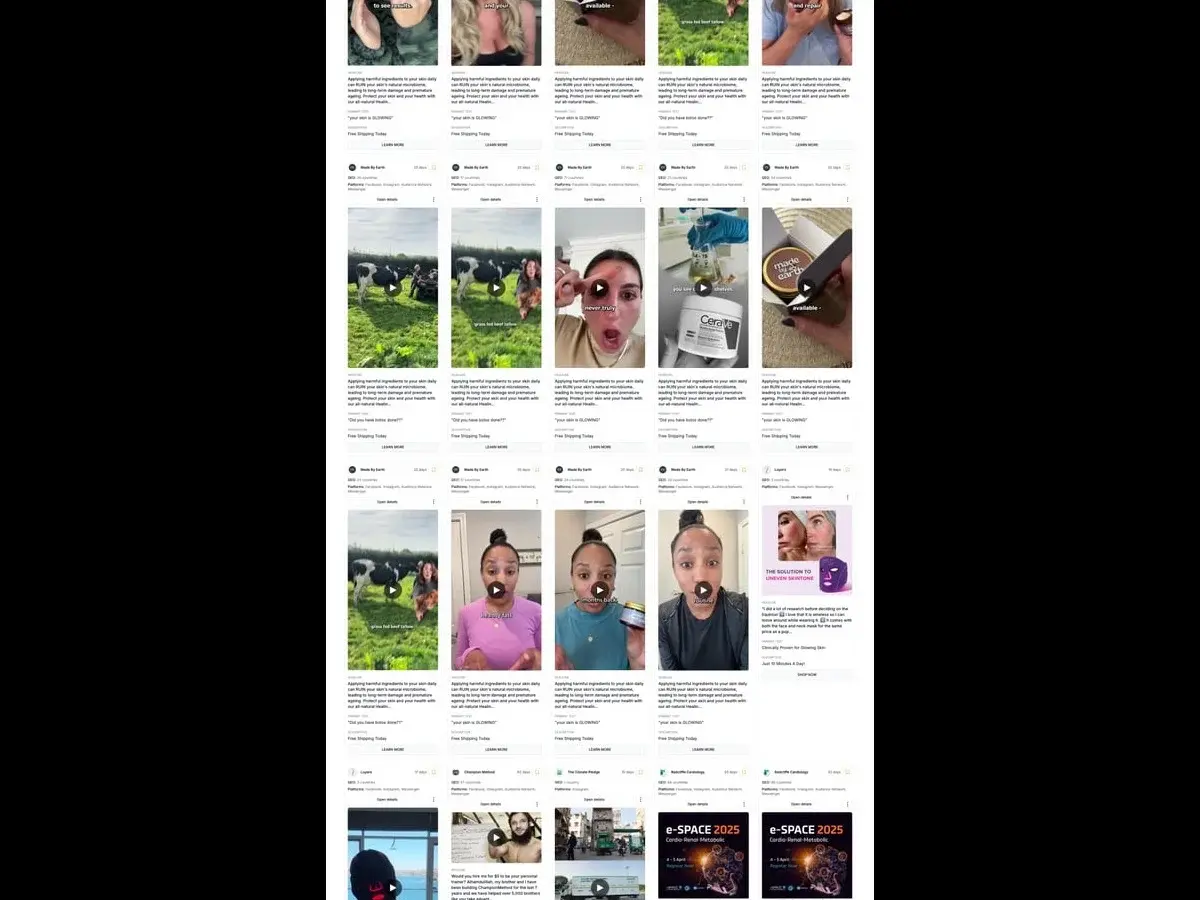 Using Adligator's days active filter to find long-running, likely compliant ads
Want to find compliant ad patterns in your vertical? Start finding compliant ad patterns with Adligator — free to try
For specific verticals, here is what to look for:
Health and supplements: Long-running ads almost never use before/after images. They rely on ingredient education, doctor endorsements (with proper disclaimers), and lifestyle imagery. Copy uses phrases like "supports healthy..." rather than "cures" or "fixes."
Finance and lending: Compliant ads avoid specific income claims. They focus on process ("Apply in minutes") rather than outcomes ("Make $10K/month"). Required disclaimers are always present.
E-commerce and dropshipping: Surviving ads feature real product photography, honest delivery timelines, and matching landing pages. Fake scarcity and misleading discounts get flagged fast.
Gambling and betting: The most restricted vertical. Compliant ads in allowed regions use age-gating disclaimers, avoid showing winning outcomes, and link to licensed operator pages.
SaaS and apps: Long-running software ads focus on feature demonstrations and social proof (user counts, G2 ratings). They avoid vague promises like "10x your productivity" and instead show specific UI screenshots with real data. Free trial CTAs significantly outperform "Buy Now" in this vertical.
Lead generation and education: Surviving ads in this space use specific, verifiable value propositions ("Join 50,000+ marketers") rather than income guarantees. Webinar and guide-based funnels with clear privacy disclosures have the best longevity.
Building a Compliance-First Creative Workflow
Knowing what is compliant is only half the battle. You need a systematic workflow that bakes compliance into your creative process from the start — not as an afterthought review step.
Phase 1: Research (Before Creative Production)
- Run a compliance audit in Adligator for your vertical. Filter to 14+ days active.
- Document safe patterns — copy frameworks, visual styles, CTA approaches.
- Identify red lines — note what is absent from long-running ads. If no one in your vertical uses before/after imagery that lasts, that is a clear signal.
- Check recent enforcement changes — filter by newest ads and compare patterns to your last audit. Shifts in what survives indicate policy updates.
Phase 2: Creative Production
- Brief your creative team with the compliance swipe file. Share specific examples of long-running ads in the vertical.
- Use compliant copy frameworks. Instead of "You will lose weight," use "Designed to support your fitness goals." Instead of "Guaranteed returns," use "Explore investment strategies."
- Match landing pages to ad creative. Meta checks post-click consistency. Ensure your landing page messaging, imagery, and offers align with the ad.
- Include required disclaimers. If your vertical requires them, add disclaimers directly in the ad creative or prominently on the landing page.
Phase 3: Pre-Launch Checklist
Before submitting any ad for review, verify:
- No personal attribute implications in copy
- No exaggerated or unsubstantiated claims
- No before/after or transformation imagery (in restricted verticals)
- Landing page matches ad creative and messaging
- All required disclaimers are present
- CTA button matches the actual offer
- No prohibited content or circumvention tactics
- Creative aligns with patterns from your compliance audit
Phase 4: Post-Launch Monitoring
After launch, track your ads alongside competitors:
- Monitor your own ad longevity. If ads are getting rejected or disabled quickly, revisit your compliance audit data.
- Set up competitor trackers. Use Adligator's tracker feature to monitor specific competitors or keywords. When their long-running ads suddenly stop, it may signal a policy enforcement change.
- Document what works. When your ads pass the 14-day mark, add them to your internal compliance reference library.
Monitoring Competitor Policy Changes with Adligator
Policy enforcement is not static. Meta regularly adjusts what gets flagged and how aggressively. Staying ahead of these changes is critical for protecting your facebook ad account.
Here is how to set up ongoing compliance monitoring:
Create vertical-specific trackers. Save searches for your top keywords with the days active filter set to 7+ days. Check weekly for shifts in what creative approaches are surviving.
Watch for sudden disappearances. If a competitor's ads that have been running for months suddenly go dark, it could indicate a policy crackdown in that approach or vertical. Investigate before using similar tactics.
Compare across geos. Meta enforces policies differently across regions. An ad approach that is compliant in the US may get flagged in the EU (especially post-DSA enforcement). Use Adligator's geo filter to compare compliance patterns across your target markets.
Track seasonal enforcement patterns. Meta tends to tighten enforcement around major shopping events (Black Friday, holiday season) and election periods. Plan your compliance audits to account for these cycles.
Build a team knowledge base. If you are running an agency or managing multiple clients, centralize your compliance findings. A shared swipe file of vertically-specific compliant patterns saves every team member from reinventing the wheel — and prevents junior media buyers from making costly compliance mistakes.
The advertisers who treat compliance as an ongoing intelligence operation — not a one-time checklist — are the ones who maintain stable ad accounts and consistent performance over time.
One often overlooked benefit of compliance monitoring: it reveals market-level shifts before they hit your campaigns. When an entire category of ads starts getting shorter lifespans, that is an early warning sign that Meta is tightening enforcement in that space. Acting on that signal early — adjusting your creative strategy before your own ads get flagged — is the difference between proactive account management and reactive damage control.
Finally, consider the compounding advantage. Every compliant ad that runs successfully improves your account-level trust score. Over months, this means faster approvals, fewer manual reviews, and more stable delivery. Your compliance investment today pays dividends on every campaign you run in the future.
FAQ
Can spy tools tell me if a specific ad violates Meta policy?
No spy tool can confirm a specific policy violation. However, you can use longevity data as a proxy — ads running for weeks or months have likely passed multiple rounds of Meta's automated and manual review, making them safer creative references.
How many days active indicates a compliant ad pattern?
Ads running 14+ days are a reasonable compliance signal. Ads active 30+ days in regulated verticals like health, finance, or gambling are strong indicators of policy-safe creative approaches.
Is it legal to monitor competitor Facebook ads with spy tools?
Yes. Ad spy tools index publicly available data from Meta's Ad Library and other public sources. Monitoring competitor ad creative strategies is a standard competitive intelligence practice used by agencies and brands worldwide.
Conclusion
A facebook ad compliance audit is not optional in 2026 — it is a survival strategy. With Meta's enforcement becoming more aggressive and account-level reputation scoring making every rejected ad costly, media buyers need a systematic approach to compliance.
The framework is straightforward: use competitive intelligence to study what survives moderation at scale, build compliance-tested creative frameworks, and monitor for enforcement changes continuously. The advertisers who treat compliance as an intelligence function — not just a legal checkbox — are the ones who keep their accounts healthy and their campaigns running.
Stop guessing what Meta will approve. Start studying what already works.
Ready to find compliant ad patterns in your vertical? Start finding compliant ad patterns with Adligator — free to try
See how top advertisers stay compliant at scale
Related Reading
- How to Build a Facebook Ad Creative Testing Framework Using Competitor Spy Data
- Facebook Ad Spy for SaaS and B2B: How to Research Competitor Campaigns Beyond Ecommerce
- Facebook Ads for Mobile Apps: How to Spy on Competitor App Install Campaigns and Steal Their Best Creatives
- Adligator vs AdSpy: In-Depth Feature Comparison for Facebook Ad Intelligence (2026)
- Influencer Whitelisting for Facebook Ads: How to Run Paid Campaigns Through Creator Accounts in 2026
