How to Build and Optimize Lookalike Audiences in Facebook Ads: Seed Strategy and Scaling (2026)
Lookalike audiences in Facebook Ads remain one of the most powerful targeting tools available to media buyers. The concept is simple: give Facebook your best customers, and the algorithm finds more people like them. The execution, however, separates profitable campaigns from expensive experiments.
Most media buyers create a basic Lookalike from their pixel data and call it done. The result: decent initial performance that plateaus within weeks. The issue is not the Lookalike feature itself — it is the seed quality, sizing strategy, and creative approach that determine whether LALs scale or stall.
This guide covers the complete framework: how to select the right seed audiences, choose optimal percentage sizes, test systematically, scale without performance decay, and use competitive intelligence to keep your LAL campaigns fresh. Whether you are spending $500 or $50,000 per month on Facebook Ads, this approach works.
How Lookalike Audiences Actually Work
Before optimizing, understand the mechanics. When you create a Lookalike Audience, Facebook's algorithm:
- Analyzes your seed audience — identifies patterns in demographics, interests, online behavior, purchase history, and thousands of other signals.
- Scores the broader population — ranks all Facebook users by similarity to your seed.
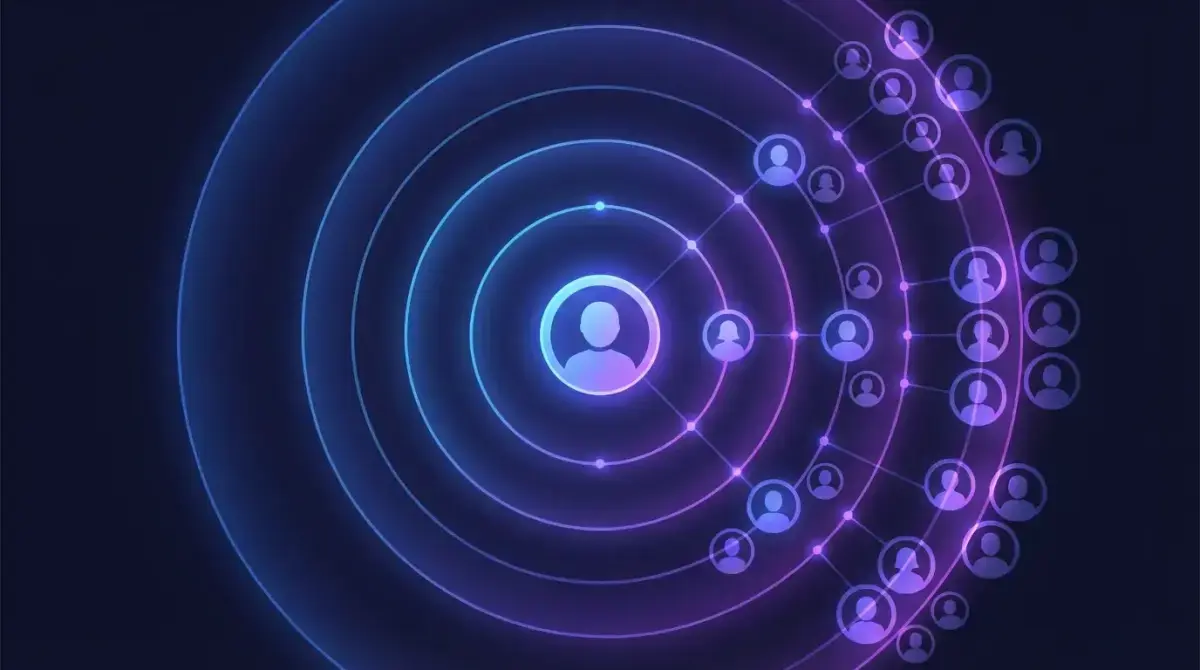
- Creates an audience segment — the top X% most similar users become your Lookalike.
The percentage you choose (1% to 10%) determines how closely the Lookalike matches your seed:
- 1% LAL — the top 1% most similar users in a given country. Highest quality, smallest reach. In the US, roughly 2.3 million people.
- 3% LAL — broader reach with slightly lower similarity. Good balance of volume and quality.
- 5% LAL — significantly broader. Works for high-budget prospecting.
- 10% LAL — very broad. Performance approaches interest-based targeting. Only useful for massive budgets or awareness campaigns.
Critical insight: The algorithm can only be as good as your seed. Feed it your best customers, and it finds more great customers. Feed it generic website visitors, and it finds more generic visitors.
Seed Audience Selection: The Foundation of Every Lookalike
This is where 80% of LAL performance is determined. The quality of your seed audience matters more than the percentage, the budget, or the creative.
Seed Quality Hierarchy
Rank your available seed audiences from highest to lowest quality:
Tier 1: Purchase-Based Seeds (Best)
- Repeat purchasers (2+ orders)
- High-LTV customers (top 25% by revenue)
- Recent purchasers (last 30–60 days)
Tier 2: Intent-Based Seeds
- Add-to-cart completers
- Checkout initiators
- Lead form submitters
Tier 3: Engagement-Based Seeds
- Email subscribers who open/click
- App installers who complete onboarding
- Video viewers (75%+ completion)
Tier 4: Traffic-Based Seeds (Weakest)
- All website visitors
- Page viewers (specific product pages)
- Social media engagers (likes, comments, shares)
 Not all seed audiences are equal — rank by conversion proximity for best LAL performance.
Optimal Seed Size
- Minimum: 100 users (Facebook's requirement), but results are unreliable below 500.
- Sweet spot: 1,000–5,000 high-quality customers.
- Maximum useful: 10,000–50,000. Beyond this, the seed becomes so broad that the algorithm struggles to identify distinguishing patterns.
If you have fewer than 1,000 purchasers: Use add-to-cart or lead events instead. A seed of 2,000 intent users outperforms a seed of 300 purchasers in most cases.
Advanced Seed Strategies
Value-Based Lookalikes: Upload customer data with lifetime value. Facebook prioritizes high-value patterns, not just conversion patterns. A value-based LAL from your top 25% customers outperforms a standard LAL from all customers by 15–30% on ROAS in most ecommerce verticals.
Recency Weighting: Create separate seeds for different time windows:
- Last 30 days (captures current trends)
- Last 90 days (more data, stable patterns)
- Last 180 days (largest dataset, but may include outdated patterns)
Test each as separate ad sets. You will often find that the 30-day seed outperforms despite smaller size — because it reflects your current best customer profile.
Product-Specific Seeds: For catalogs with diverse products, create separate LALs per product category. A LAL based on premium product buyers targets differently than one based on discount buyers.
Percentage Sizing: A Testing Framework
Stop guessing which percentage works best. Test systematically:
The Stacking Method
Create multiple LALs from the same seed at different percentages:
- 1% LAL → Ad Set 1
- 1–3% LAL (excludes 1%) → Ad Set 2
- 3–5% LAL (excludes 1–3%) → Ad Set 3
Run all three in an ABO campaign with equal budgets for 5–7 days. Compare CPA and ROAS. Typically:
- 1% wins on efficiency (lowest CPA, highest ROAS)
- 1–3% wins on volume (most conversions at acceptable CPA)
- 3–5% is only worth scaling if 1–3% saturates
Country Considerations
LAL percentage means different things in different markets:
- US (1% LAL): ~2.3 million people. Plenty of volume for most budgets.
- UK (1% LAL): ~450,000 people. May need 2–3% for adequate reach.
- Small markets (1% LAL): Under 100,000 people. Start at 3–5%.
Always factor in your country's Facebook penetration rate when choosing percentages.
Multi-Country LALs
For campaigns targeting multiple countries, create separate LALs per country rather than one multi-country LAL. The algorithm identifies different patterns in different markets. A US purchaser profile differs significantly from a Brazilian one.
Building and Testing: Step-by-Step Workflow
Here is the complete workflow for launching LAL campaigns:
Step 1: Prepare Your Seed
- Export your customer list from CRM/Shopify/database
- Include: email, phone, first name, last name, country, zip code
- For value-based LALs: add a value column with LTV or purchase amount
- Upload to Facebook as Custom Audience
- Wait for matching (typically 24–48 hours, aim for 50%+ match rate)
Step 2: Create Lookalike Variations
- From your Custom Audience, create 1%, 1–3%, and 3–5% LALs
- Select target country (one per LAL)
- Wait for population (1–24 hours)
- Verify audience sizes are reasonable for your budget
Step 3: Launch Test Campaign
- Create an ABO campaign (not CBO — you need equal spend distribution for fair testing)
- One ad set per LAL percentage
- Use your current best-performing creatives (do not test new creatives simultaneously)
- Set equal daily budgets per ad set ($20–$50 minimum per ad set)
- Run for 5–7 days minimum before making decisions
Step 4: Analyze and Scale
After the test period:
- If 1% LAL wins clearly: Scale that ad set first. Expand to 2–3% when 1% frequency hits 3+.
- If 1–3% LAL wins: Good sign for scaling. Increase budget gradually (20–30% every 2–3 days).
- If all perform similarly: Your seed may not be strong enough. Go back to seed quality optimization.
- If none perform well: The issue is likely creative, not audience. Test new creatives before changing audiences.
Step 5: Exclude and Layer
Critical targeting hygiene:
- Always exclude existing customers and recent purchasers (180 days)
- Always exclude other active LAL ad sets to prevent overlap
- Layer with broad interests only if your LAL is too small (<50,000)
- Never narrow a 1% LAL with interest targeting — it defeats the purpose
Scaling Lookalike Audiences Without Performance Decay
LALs plateau. It is inevitable. Here is how to extend their lifespan and scale sustainably.
Horizontal Expansion
When your 1% LAL saturates:
- Expand to 2% LAL (exclude 1%)
- Create LALs from new seed types (purchasers → add-to-cart → email subscribers)
- Test LALs in new countries
- Create product-specific LALs if running a catalog
Creative Refresh (The #1 Scaling Lever)
LAL audiences do not fatigue — creatives do. When performance declines:
- Check frequency first. If above 3–4 on cold audiences, the issue is creative saturation.
- Refresh creatives every 2–3 weeks for high-spend campaigns.
- Test different angles: product demo → testimonial → UGC → comparison → lifestyle.
- Use competitive intelligence to find new creative angles (covered below).
Seed Refresh
Refresh your seed audiences every 30–60 days:
- Re-export customer data with the latest purchasers
- Re-create Custom Audience
- Build new LALs from the updated seed
- Run old and new LALs simultaneously for 5–7 days
- Kill the underperformer
Budget Scaling
Follow the same principles as any Facebook Ads campaign:
- Increase by 20–30% every 2–3 days
- Use horizontal scaling (duplicate to new campaigns) for large budget jumps
- Monitor CPA at each increment — if CPA rises >20%, pause the increase
Using Competitive Intelligence to Improve LAL Campaign Performance
Here is what most LAL guides miss: your audience targeting can be perfect, but if your creative does not resonate, the campaign fails. And the fastest way to find resonating creatives is to study what already works in your niche.
Why Competitor Research Matters for LAL Campaigns
Your Lookalike audience is algorithmically similar to your best customers. Competitors targeting the same demographic are essentially running campaigns to overlapping audiences. Their proven creatives give you a roadmap for what messaging, formats, and hooks work.
What to Look For
- Ad longevity (14+ days active): These creatives are confirmed performers. Study their hooks, visual style, and CTA approach.
- Format trends: Are competitors winning with video? UGC? Carousel? Match the format that performs best in your vertical.
- Messaging angles: What pain points are competitors hitting? What benefits do they emphasize? Use this to inform your own creative brief.
- Offer structure: Free shipping, discounts, free trials — what offers convert in your niche?
How Adligator Accelerates This
Manually checking the Meta Ad Library for competitor research is slow and lacks critical filters. Adligator lets you:
- Filter competitor ads by days active to find only proven winners
- Search by keyword or advertiser to monitor specific competitors
- Filter by ad format, language, and platform for precise analysis
- Track competitors with live filter trackers for automatic updates on new creatives
 Research competitor creatives to find messaging angles that resonate with audiences similar to yours.
Want to find proven creative angles for your LAL campaigns? Try Adligator Free — Research Competitor Creatives for Your LAL Campaigns
The workflow: every time you refresh creatives for your LAL campaigns, spend 15 minutes in Adligator analyzing competitor ads that have been running 14+ days. Note their hooks, formats, and offers. Build your new creatives with those proven patterns as inspiration — not copies.
Common Lookalike Audience Mistakes
Mistake 1: Using Website Visitors as Your Only Seed
Website visitors include bouncers, bots, and accidental clicks. Use purchase or intent-based seeds instead. A LAL from 1,000 purchasers outperforms a LAL from 100,000 website visitors every time.
Mistake 2: Never Refreshing Seeds
Your customer profile evolves. A seed from 6 months ago targets who your customers were, not who they are now. Refresh every 30–60 days.
Mistake 3: Narrowing LALs with Interest Targeting
Adding interest targeting to a 1% LAL dramatically shrinks the audience and contradicts the algorithm's work. Trust the LAL. If it does not perform, the issue is seed quality or creative — not the audience definition.
Mistake 4: Running All Percentages in One CBO Campaign
CBO will dump budget into the cheapest ad set (often the broadest LAL). Use ABO for testing so each percentage gets fair evaluation.
Mistake 5: Ignoring Audience Overlap
Running a 1% LAL, a 2% LAL, and a 3% LAL in separate campaigns without exclusions means you are bidding against yourself. Always exclude lower percentages from higher ones.
Mistake 6: Testing New Creatives and New Audiences Simultaneously
One variable at a time. Test new audiences with proven creatives. Test new creatives with proven audiences. Never both at once — you will not know what drove the result.
LAL Campaign Optimization Checklist
Before launching or scaling any Lookalike campaign:
- Seed audience is purchase or intent-based (not just website visitors)
- Seed size is 1,000–5,000 users
- Multiple percentages created (1%, 1–3%, 3–5%) for testing
- Exclusions set (existing customers, other active LALs)
- Test campaign uses ABO with equal budgets
- Proven creatives used for audience testing
- Seed refresh scheduled (every 30–60 days)
- Frequency monitored (creative refresh when >3 on cold audiences)
- Competitor creative research completed before creative refresh
- Value-based LAL tested if LTV data is available
FAQ
What is the best seed audience size for Facebook Lookalike Audiences?
The ideal seed audience is 1,000–5,000 high-quality customers. Smaller seeds (under 1,000) may lack enough data for the algorithm to identify patterns. Larger seeds (10,000+) work but dilute quality — the algorithm has less signal about what makes your best customers unique. Quality always beats quantity for seeds.
Should I use 1% or 5% Lookalike Audiences?
Start with 1% for highest similarity to your seed audience — these convert best but have limited reach. Expand to 2–3% when scaling. Use 5–10% only for broad prospecting or high-budget campaigns. Stack multiple percentages in separate ad sets to test which performs best for your specific offer.
How often should I refresh my Lookalike Audiences?
Refresh seeds every 30–60 days using your most recent customer data. Facebook's algorithm updates LALs periodically, but the seed data determines quality. If your customer profile changes seasonally, refresh more frequently. Always exclude existing customers from LAL targeting to avoid wasted spend.
Conclusion
Lookalike audiences in Facebook Ads are only as powerful as the strategy behind them. Start with high-quality seeds — purchasers and intent signals over generic traffic. Test percentage sizes systematically using ABO with equal budgets. Scale through horizontal expansion (new seeds, new countries, new percentages) rather than just increasing budget on a single LAL.
Refresh seeds every 30–60 days to keep targeting current. Refresh creatives every 2–3 weeks to avoid fatigue. And use competitive intelligence to inform your creative strategy — because the best audience targeting in the world cannot save a weak creative.
Ready to research competitor creatives for your next LAL campaign? Try Adligator Free — Research Competitor Creatives for Your LAL Campaigns
See What Ads Work for Audiences Like Yours
Related Reading
- How to Audit a Facebook Ad Account Before Scaling: A 30-Minute Pre-Flight Checklist for Media Buyers
- Facebook Ad Account Structure and Naming Conventions: A Scaling Framework for Media Buyers
- How to Build a Facebook Ad Creative Testing Framework Using Competitor Spy Data
- Facebook Ads Retargeting 101: How to Build Your First Remarketing Funnel from Scratch
