Post-Purchase Facebook Ads: How to Build Retention Campaigns That Maximize Customer Lifetime Value
Most Facebook ad strategies focus entirely on acquiring new customers. The ads stop the moment someone makes a purchase. That's a massive missed opportunity — acquiring a new customer costs 5-7x more than retaining an existing one, and repeat customers spend 67% more on average.
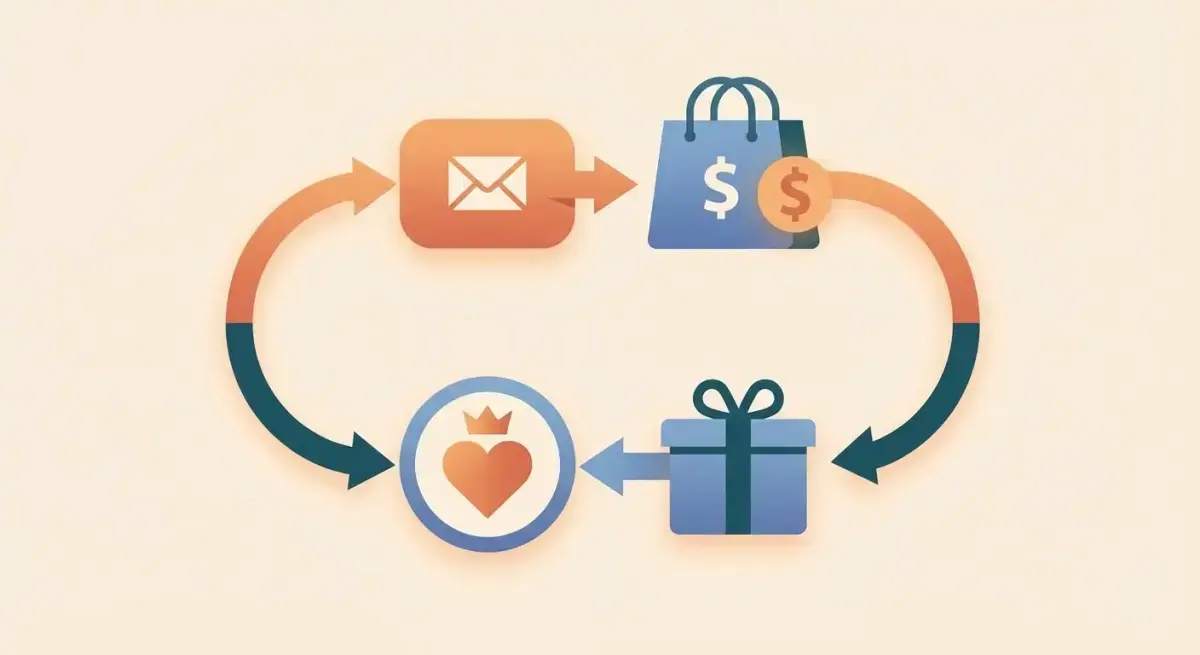
Post purchase facebook ads are the campaigns that run after someone buys from you. They're designed to turn one-time buyers into repeat customers, increase average order value through cross-sells, and build long-term brand loyalty. And because you're targeting people who already trust you enough to spend money, these campaigns consistently deliver the highest ROAS in your entire account.
This guide covers the complete framework for building facebook ads retention campaigns that maximize customer lifetime value.
Why Post-Purchase Campaigns Matter More Than Acquisition
The economics of retention vs acquisition are clear:
- Repeat customers convert at 60-70% vs 1-3% for new visitors
- A 5% increase in retention can increase profits by 25-95%
- Repeat buyers spend 67% more than first-time customers
- Customer acquisition cost (CAC) continues rising year over year
Most e-commerce businesses spend 80-90% of their ad budget on acquisition. Shifting even 10-15% to retention campaigns can dramatically improve overall profitability.
The Post-Purchase Window
The 30 days after a purchase is the most critical period in customer retention. This is when:
- Brand sentiment is highest (they just received something they wanted)
- Engagement rates are 3-5x higher than cold audiences
- Cross-sell and upsell receptivity peaks
- Referral likelihood is at its maximum
Miss this window, and customers gradually forget about you. Hit it with the right message, and you build a loyal buyer.
Building Your Post-Purchase Campaign Structure
Here's a proven structure for post-purchase facebook ads:
Campaign 1: Thank You & Onboarding (Days 1-7)
Goal: Reinforce the purchase decision and reduce buyer's remorse.
Creative approaches:
- Thank you video from the founder or team
- Product usage tips and getting-started guides
- Customer community invitation (Facebook Group, newsletter)
- Social proof — "Join 50,000+ happy customers"
Targeting: Custom audience of purchasers, last 7 days. Exclude anyone who's already made a second purchase.
Budget: Low — $5-10/day. This is about relationship building, not sales.
Campaign 2: Cross-Sell & Upsell (Days 7-30)
Goal: Drive a second purchase with complementary products.
Creative approaches:
- "Customers who bought X also love Y" — personalized recommendations
- Bundle deals — "Complete your set and save 20%"
- New arrivals related to their purchase category
- Seasonal or limited-time offers
Targeting: Custom audience of purchasers, 7-30 days. Exclude recent purchasers (last 7 days) and second-time buyers.
Budget: Moderate — $10-30/day. This is your primary retention revenue driver.
Campaign 3: Win-Back (Days 30-90)
Goal: Re-engage customers who haven't purchased again.
Creative approaches:
- "We miss you" messaging with a special offer
- Exclusive discount — "10% off because you're a valued customer"
- New product announcements
- User-generated content and reviews
Targeting: Purchasers 30-90 days ago, excluding anyone who purchased in the last 30 days.
Budget: Moderate — $10-20/day. These customers are at risk of churning.
Campaign 4: Loyalty & VIP (Ongoing)
Goal: Reward your best customers and encourage advocacy.
Creative approaches:
- Early access to new products
- VIP-only sales and discounts
- Referral program promotions
- Customer spotlight and testimonials
Targeting: Repeat purchasers (2+ purchases) or high-value customers (top 20% by spend).
Budget: Low — $5-10/day. High-value, low-volume audience.
Creative Strategy for Retention Ads
Retention ads should feel fundamentally different from acquisition ads. The person already knows your brand — don't pitch them like a stranger.
Tone Shift
| Acquisition Ads | Retention Ads |
|---|---|
| "Discover our bestseller" | "Time to restock?" |
| "Free shipping on first order" | "As a returning customer, enjoy 15% off" |
| "See why 50K customers love us" | "Thanks for being part of our community" |
| Problem-aware messaging | Outcome-reinforcing messaging |
Best Performing Formats
- Dynamic Product Ads (DPA) for cross-sell — automatically show products related to what they bought
- Video testimonials from existing customers — social proof from peers
- Carousel of complementary products — "Complete your look" or "Goes great with your purchase"
- Single image with exclusive offer — clean, direct, with urgency
Personalization Tactics
- Reference their purchase — "Loving your Product Name? Here's what pairs perfectly with it"
- Use purchase timing — "It's been 30 days since your order — time for a refill?"
- Segment by category — show different cross-sells based on what category they bought from
- Segment by value — high-value customers get VIP treatment, first-time buyers get onboarding
Want to see how leading brands structure their retention ads? See how top brands run retention ads — research with Adligator free
Audience Segmentation for LTV Optimization
The key to maximize customer lifetime value through Facebook ads is precise audience segmentation.
Essential Custom Audiences
Create these custom audiences in your Ad Account:
- All purchasers (0-7 days) — for onboarding campaigns
- All purchasers (7-30 days) — for cross-sell campaigns
- All purchasers (30-90 days) — for win-back campaigns
- Repeat purchasers (2+ purchases) — for loyalty campaigns
- High-value purchasers (top 20% by AOV) — for VIP treatment
- Churned customers (90-180 days, no purchase) — for aggressive win-back
Exclusion Strategy
Every retention campaign needs proper exclusions:
- Onboarding campaign: Exclude repeat purchasers (they don't need onboarding)
- Cross-sell campaign: Exclude purchasers of the cross-sell product
- Win-back campaign: Exclude anyone who purchased in the last 30 days
- All retention campaigns: Exclude from prospecting campaigns to prevent overlap
Lookalike Audiences from Retention Data
Your retention audiences are goldmines for prospecting:
- LAL of repeat purchasers — finds people likely to become loyal customers
- LAL of high-LTV customers — targets people with similar spending patterns
- LAL of 90-day active customers — broader but still quality-filtered
These lookalikes typically outperform standard purchase lookalikes for long-term profitability.
Measuring Retention Campaign Performance
Standard metrics don't tell the full story for retention campaigns. Here's what to track:
Primary Metrics
| Metric | Definition | Target |
|---|---|---|
| Repeat Purchase Rate | % of customers who buy again | 25-40% (varies by industry) |
| Time to Second Purchase | Days between first and second purchase | Decrease over time |
| Customer LTV (90-day) | Total revenue per customer in 90 days | Increase over time |
| Retention Campaign ROAS | Revenue from retention ads / retention ad spend | 5-15x |
| Cost per Repeat Purchase | Ad spend per second purchase | Lower than CAC |
Cohort Analysis
Track customer cohorts (grouped by acquisition month) to measure:
- What % of each cohort made a second purchase within 30/60/90 days
- How retention campaign exposure correlates with repeat purchase rates
- Which creative or offer drove the highest cohort retention
Attribution Considerations
Post-purchase campaigns often get underreported in standard attribution models because:
- Email and ads work together — the customer may see both before repurchasing
- View-through conversions are high for retention (brand awareness effect)
- Long purchase cycles mean last-click attribution misses the influence
Use 7-day click + 1-day view attribution window for retention campaigns at minimum.
Common Retention Campaign Mistakes
1. Showing the Same Product They Just Bought
Nothing is more annoying than being retargeted with a product you already purchased. Use dynamic exclusions to remove purchased products from DPA recommendations.
2. Starting Cross-Sells Too Early
Hitting a customer with "Buy more!" the day after their first purchase feels pushy. Give them 7-14 days to receive, use, and enjoy their product before cross-selling.
3. No Frequency Caps
Retention audiences are small. Without frequency caps, you'll bombard the same 500 people with 30 impressions per week. Set frequency caps at 3-5 impressions per week.
4. Treating All Customers the Same
A customer who spent $500 deserves different treatment than one who spent $15 on a trial product. Segment by purchase value and tailor your messaging accordingly.
5. Only Running Discount-Based Retention
If every retention ad is a discount, you train customers to only buy on sale. Mix in value-based content: usage tips, community content, new arrivals, and social proof alongside occasional offers.
FAQ
When should I start showing ads to post-purchase customers?
Start 24-48 hours after purchase with a thank-you or onboarding message. Wait 7-14 days before showing cross-sell or upsell ads. Timing depends on your product's usage cycle.
How much budget should I allocate to retention campaigns?
Allocate 10-20% of your total Facebook ad budget to retention. These campaigns typically deliver 3-5x higher ROAS than prospecting because you're targeting proven buyers.
Should I exclude recent purchasers from prospecting campaigns?
Yes, always. Exclude purchasers from the last 7-30 days from prospecting campaigns to avoid wasting budget on people who just bought. Add them to your retention campaigns instead.
Conclusion
Post purchase facebook ads are the most underutilized weapon in e-commerce advertising. While competitors fight over ever-more-expensive new customer acquisition, smart marketers build systematic retention campaigns that turn one-time buyers into loyal, high-LTV customers.
Start with a simple three-campaign structure: onboarding, cross-sell, and win-back. Segment your audiences precisely, match your creative tone to the relationship stage, and measure success by customer lifetime value — not just immediate ROAS.
The brands that win long-term aren't the ones that acquire the most customers. They're the ones that keep them.
Ready to see how top brands approach retention advertising? See how top brands run retention ads — research with Adligator free
Related Reading
- How to Combine Facebook Ads and Email Marketing to Maximize Ecommerce Customer Lifetime Value in 2026
- DTC Brand Facebook Ad Research: How to Spy on Competitors and Build a Winning Creative Launch Strategy
- Facebook Ads Retargeting 101: How to Build Your First Remarketing Funnel from Scratch
- How to A/B Test Facebook Ad Creatives: A Beginner Guide to Statistical Confidence and Faster Winners
