Top Facebook Ad Hook Patterns That Drive Clicks in 2026: Data-Backed Analysis for Performance Marketers
Your ad has roughly 1.5 seconds to survive the scroll. That is the window where your Facebook ad hook either captures attention or gets buried — and no amount of targeting precision or bid optimization can fix a hook that fails.
For performance marketers running Meta campaigns in 2026, the hook is not just the first line of copy or the opening frame of a video. It is the single most leveraged element of your entire ad. A strong hook compounds across impressions; a weak one bleeds budget silently.
The problem is that most media buyers test hooks by instinct. They write five variations, pick the one that "feels" best, and launch. The marketers consistently hitting above-average click-through rates take a different approach: they study what is already working at scale, reverse-engineer the patterns, and build their hook library from proven data — not guesswork.
This article breaks down the facebook ad hooks that are driving the highest CTR in 2026, explains why each pattern works, and shows you how to build a systematic process for finding and testing hooks that convert.
Why the Hook Is the Highest-Leverage Element in Your Ad
Before diving into patterns, it helps to understand the mechanics. Facebook's auction system rewards relevance. If your ad gets strong early engagement (stops, clicks, watches past 3 seconds), the algorithm treats it as a signal to show it to more of your audience at a lower cost.
The hook is where that cycle starts or dies:
- Video ads: the first 1–3 seconds determine whether a viewer watches or scrolls. Facebook measures ThruPlay and video watch percentages, and both feed back into delivery optimization.
- Static image ads: the headline and first line of primary text are the hook. If they do not create enough curiosity or relevance, the ad gets low engagement and increasingly expensive delivery.
- Carousel ads: the first card and its copy are effectively the hook. Swipe rate on the first card predicts the performance of the entire carousel.
The key insight: your hook does not need to sell. It needs to earn the next second of attention. Everything else — the value proposition, the offer, the CTA — comes after.
The 5 Hook Patterns Dominating Facebook Ads Right Now
After analyzing thousands of long-running Meta ads across verticals, five ad hook patterns consistently appear in the creatives that survive past 14 days of active spend — a strong signal of profitability.
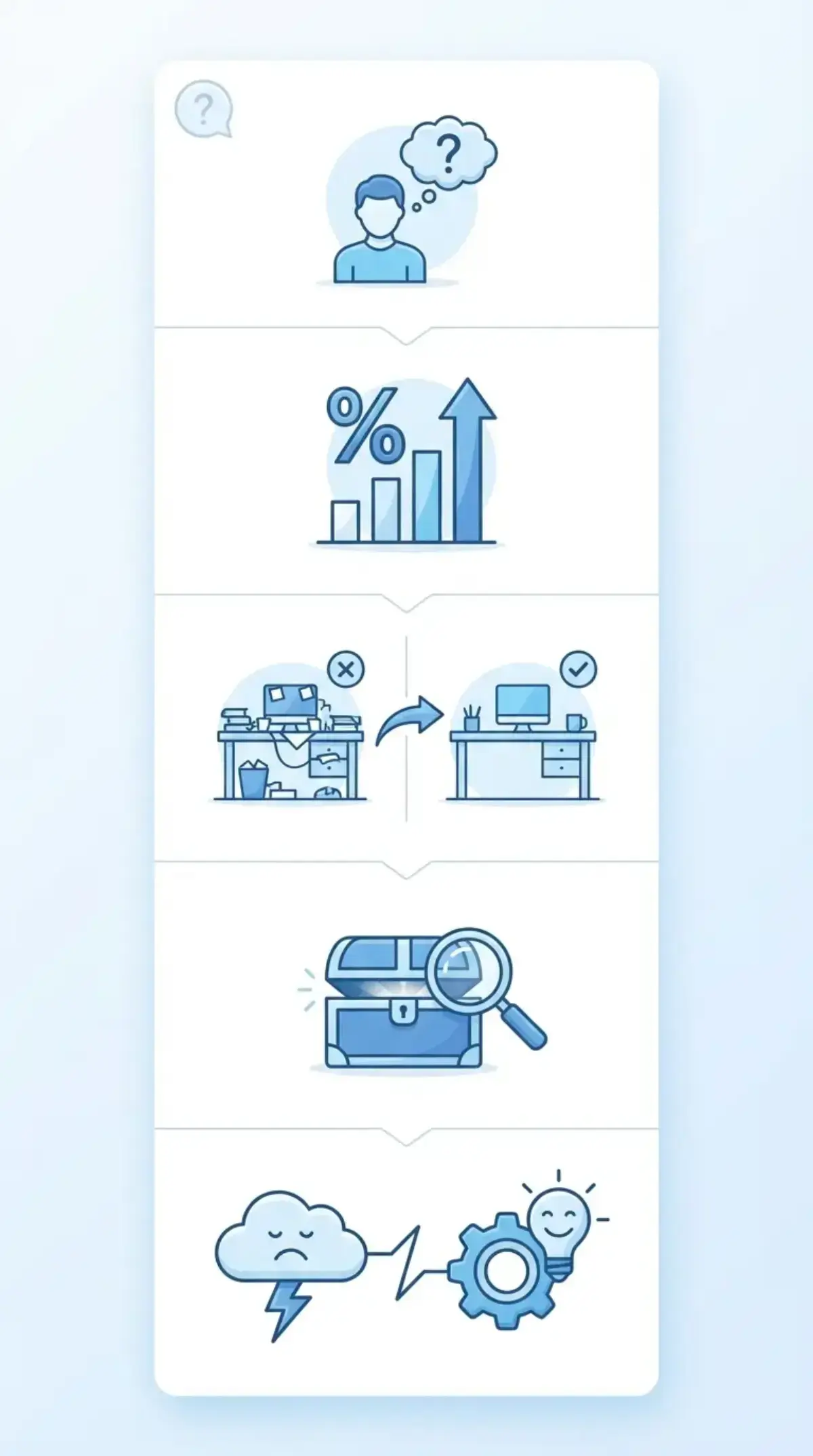 The five dominant hook patterns driving CTR in Facebook ads.
1. The Question Hook
Opens with a direct question that the target audience cannot ignore because it mirrors their internal dialogue.
Why it works: Questions activate the brain's pattern-completion instinct. The viewer mentally starts answering before they consciously decide to engage — and by then, they have already stopped scrolling.
Examples:
- "Still boosting posts and wondering why your ROAS is flat?"
- "What if your competitors are running ads you have never seen?"
- "Is your CPM climbing and you don't know why?"
Best for: TOFU awareness campaigns, problem-aware audiences, video ads where the question is spoken in the first 2 seconds.
Pitfall to avoid: Generic questions like "Want to grow your business?" are invisible because they apply to everyone and therefore resonate with no one.
2. The Bold Stat Hook
Leads with a specific, surprising number that disrupts expectations.
Why it works: Specificity creates credibility, and surprise creates curiosity. The brain flags unexpected numbers as worth investigating.
Examples:
- "67% of ad budgets are wasted on creatives that never get tested properly."
- "We cut CPA by 43% by changing nothing but the first 2 seconds of our video."
- "The average Facebook ad runs for 3 days. The top 1% run for 30+."
Best for: Commercial-intent audiences, B2B campaigns, retargeting where credibility matters.
Pitfall to avoid: Fabricated or vague stats ("studies show..." without a source) erode trust. Use real numbers from your campaigns or cite industry benchmarks.
3. The Before/After Hook
Shows a transformation — either visually or through copy — that maps to the audience's desired outcome.
Why it works: Before/after is the most intuitive proof format. The viewer instantly understands the value proposition without reading a paragraph of copy.
Examples:
- Video: side-by-side of a cluttered desk vs. an organized workspace (for productivity tools)
- Copy: "Last month: $12 CPA and scaling anxiety. This month: $4.80 CPA and 3x budget."
- Image: skin before vs. after (for DTC skincare — the most proven format in that vertical)
Best for: DTC products, SaaS with measurable outcomes, any offer where transformation is visual or quantifiable.
Pitfall to avoid: Overpromising. Unrealistic before/after claims trigger ad disapprovals and audience skepticism.
4. The Curiosity Gap Hook
Creates an information gap that the viewer needs to close. The hook promises a reveal that requires engagement to access.
Why it works: The Zeigarnik effect — our brains are wired to seek closure on open loops. A well-crafted curiosity gap makes scrolling past feel like leaving a story unfinished.
Examples:
- "There's one targeting setting most advertisers never check — and it is costing them 20%+ of their budget."
- "We found the ad format Facebook's algorithm quietly favors in 2026."
- Video: "I'm going to show you the exact ad our competitor ran for 47 days straight..."
Best for: Content-style ads (advertorials), video ads, lead generation campaigns.
Pitfall to avoid: Clickbait that does not deliver. If the body of your ad does not resolve the curiosity gap with real value, your engagement metrics will crater after the initial click.
5. The Problem-Agitation Hook
Names a specific pain point and intensifies it before presenting the ad's solution.
Why it works: Problem-agitation forces the viewer to feel the pain they have been ignoring. It moves them from passive scrolling to active problem-solving mode — which is exactly where you want them when your CTA appears.
Examples:
- "You're spending $200/day on ads and have no idea which creative is actually driving sales."
- "Your competitor just launched 15 new creatives this week. You launched one."
- "Every day you're not monitoring competitor ads, you're flying blind with your budget."
Best for: BOFU campaigns, retargeting, competitive positioning ads.
Pitfall to avoid: Over-agitation that feels manipulative. The goal is empathy ("I understand your problem") not fear-mongering.
How to Find Winning Hooks at Scale with Spy Tools
Studying these patterns is useful. But the real competitive advantage comes from systematically finding which hooks are working right now in your specific vertical — and that requires more than scrolling through Meta Ad Library.
The manual approach — browsing the Ad Library, saving screenshots, copying text into a spreadsheet — works at small scale. The limitation hits when you need to:
- Monitor multiple competitors simultaneously
- Filter by ad longevity to identify proven winners
- Compare hook patterns across platforms (Facebook vs. Instagram)
- Track how hooks evolve over weeks as advertisers iterate
This is where ad intelligence tools become essential. With Adligator, you can filter competitor ads by days active (14+ days is a strong profitability signal), format, platform, and GEO — then analyze the hooks of only the ads that have survived the algorithm's natural selection.
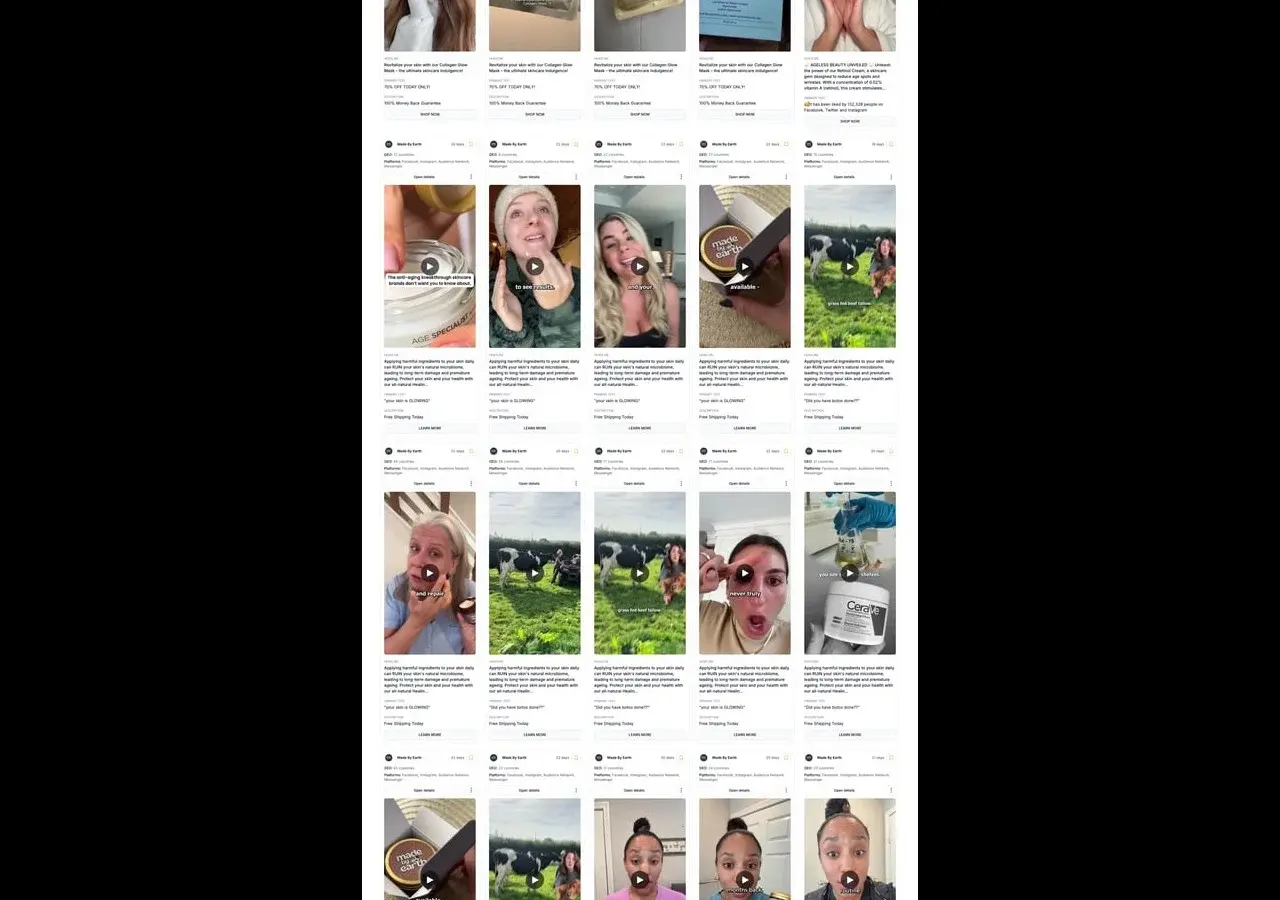 Filtering by longevity in Adligator surfaces ads with proven hooks.
Practical workflow:
- Search by keyword or competitor page ID in your vertical
- Set the "Days active" filter to 14+ — this eliminates test ads and surfaces only creatives with proven performance
- Sort by newest to see current winners, not outdated patterns
- Analyze the first line of copy and first frame of video for each result
- Categorize each hook into one of the five patterns above
- Track frequency: if 60% of long-running ads in your vertical use question hooks, that is a strong signal about what the audience responds to
Ready to stop guessing which hooks work? Start finding winning ad hooks with Adligator
Building a Hook Testing Framework
Finding winning hooks is half the battle. The other half is testing them systematically within your own campaigns. Here is a framework that top media buyers use to turn competitor research into performance gains.
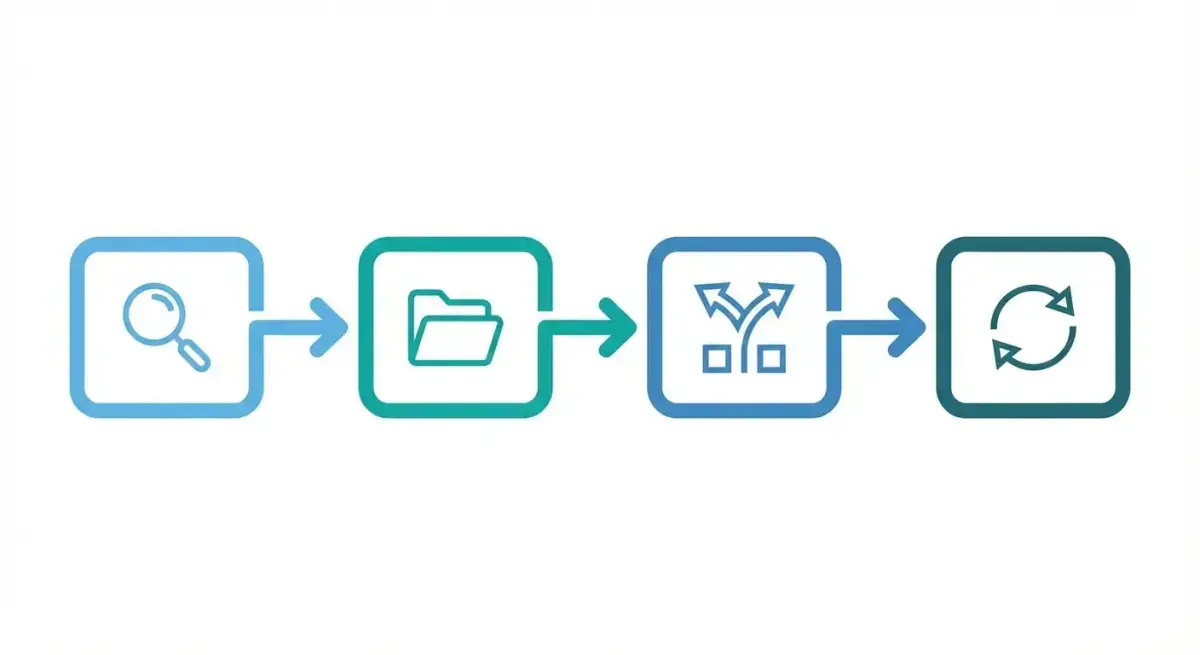 A systematic hook testing framework for performance marketers.
Step 1: Build Your Hook Library
Spend 30 minutes per week analyzing competitor ads through a spy tool. For each winning ad you find, extract:
- The hook type (question, stat, before/after, curiosity, problem-agitation)
- The exact phrasing or visual approach
- The vertical and audience it targets
- How long the ad has been running
Store these in a simple spreadsheet or Notion database. After a month, you will have 50+ proven hooks categorized by pattern and vertical.
Step 2: Create Hook Variations
For each ad concept you plan to launch, write at least 5 hook variations using different patterns from your library:
- 1 question hook
- 1 bold stat hook
- 1 curiosity gap hook
- 1 problem-agitation hook
- 1 before/after hook
Keep the ad body identical across all variations. This isolates hook performance from message performance.
Step 3: Structure Your Test
Run all 5 hooks in a single ad set using Facebook's dynamic creative or as individual ads within an A/B test structure. Key settings:
- Budget: allocate enough per variation to reach statistical significance (typically $20–50 per hook over 3–5 days, depending on your CPM)
- Metric to watch: ThruPlay rate for video, CTR (link) for static, and hook-to-hold ratio (3-second views / impressions)
- Kill threshold: if a hook underperforms the average by 30%+ after 48 hours, pause it and reallocate
Step 4: Iterate on Winners
Once you identify your top 1–2 hooks, create variations within that pattern:
- Change the specific number in a stat hook
- Rephrase the question from a different angle
- Test the same hook in video vs. static format
This iterative refinement is where the compounding gains happen. Your best hooks become templates that you can adapt across campaigns and offers.
Hook Patterns by Ad Format: What Works Where
Not every hook pattern performs equally across formats. Here is what the data shows for 2026:
Video Ads
Video is where hooks matter most because the time window is smallest. The top-performing patterns for Facebook video ads:
- Curiosity gap — create an open loop in the first 2 seconds that only resolves later in the video
- Bold stat — flash a number on screen in the first frame, then explain it
- Problem-agitation — show the pain visually (messy desk, error screens, declining graphs)
Tactical tip: The audio hook matters as much as the visual hook. If your first spoken word is "Hey" or "So", you have already lost. Start mid-thought: "The reason your CPA doubled last week..."
Static Image Ads
Static hooks live in the headline and primary text. The patterns that drive the highest facebook ad click through rate on static:
- Question hook in the primary text, with the answer implied by the image
- Before/after in the image itself (split-screen or side-by-side)
- Bold stat in the headline, with context in the primary text
Tactical tip: Front-load the hook in the first 125 characters of primary text — that is all that shows before "See more" on mobile.
Carousel Ads
The first card is the hook for the entire carousel. Patterns that drive swipe-through:
- Curiosity gap on card 1 ("Here's why your competitor's ads outperform yours. Swipe to see the framework.")
- Numbered list preview ("5 hook patterns that drive clicks. #1 will surprise you.")
Tactical tip: Make card 1 deliberately incomplete. If it delivers full value, there is no reason to swipe.
Common Hook Mistakes That Kill CTR
Even experienced media buyers make these errors:
- Starting with your brand name: Nobody stops scrolling because they see "Acme Corp presents..." Lead with the audience's problem, not your logo.
- Being vague: "Improve your marketing" is not a hook. "Cut your CPA by 40% using a technique your competitors are already using" is.
- Cramming the value proposition into the hook: The hook earns attention. The body delivers value. The CTA converts. Mixing these roles weakens all three.
- Ignoring mobile-first formatting: 94%+ of Facebook ad impressions are on mobile. If your hook requires reading a paragraph of text, it will fail.
- Testing one hook per creative: This is the single biggest waste of ad spend in creative testing. One concept deserves 5–10 hook variations minimum.
- Never refreshing hooks: Even winning hooks fatigue. Monitor frequency and refresh hooks every 2–3 weeks for cold audiences.
Measuring Hook Performance: The Metrics That Matter
Standard CTR tells you whether the ad got clicked, but it does not tell you whether the hook specifically worked. Use these metrics to isolate hook performance:
- Hook rate (video): 3-second video views ÷ impressions. This measures pure hook effectiveness — did the opening stop the scroll?
- Hold rate (video): ThruPlay ÷ 3-second views. This separates hook quality from body quality.
- CTR (link click) (static): The closest proxy to hook effectiveness for non-video formats.
- Cost per ThruPlay: A lower cost means the algorithm is rewarding your hook with cheaper delivery.
- Frequency at fatigue: Track at what frequency your CTR drops below baseline — this tells you when to refresh the hook.
Build a simple dashboard that tracks these metrics per hook variation. Over time, you will see clear patterns in which hook types your audience responds to most consistently.
FAQ
What is an ad hook and why does it matter for Facebook ads?
An ad hook is the opening 1–3 seconds of a video or the first line of ad copy that captures attention. It matters because Facebook's algorithm rewards engagement — if your hook fails, users scroll past and your entire ad budget is wasted regardless of how good the rest of the creative is.
How many hooks should I test per ad concept?
Top-performing media buyers typically test 5–10 hook variations against a single core ad body. This lets you isolate hook performance without changing the message. Use spy tools to generate hook hypotheses based on what competitors are already running successfully.
How can I find winning Facebook ad hooks from competitors?
Use an ad intelligence tool like Adligator to filter ads by longevity (days active) and format. Ads running for 14+ days with the same creative likely have a strong hook. Analyze the opening lines, first frames, and headline patterns across your top competitors.
Conclusion
The best-performing facebook ad hooks in 2026 are not random acts of creativity. They follow identifiable patterns — questions, bold stats, before/after transformations, curiosity gaps, and problem-agitation sequences — that are repeatable, testable, and improvable over time.
The difference between media buyers who consistently hit above-average CTR and those who struggle is not talent. It is process. The top performers build hook libraries from real competitive data, test multiple variations per concept, and iterate based on metrics — not gut feeling.
Stop guessing which ad creative hooks 2026 audiences respond to. Start studying what is already working at scale.
Ready to find the hooks your competitors are running right now? Start finding winning ad hooks with Adligator
Looking for more on creative strategy? Read our guide on Facebook ad creative trends for 2026.
Related Reading
- Short-Form Video Ads on Facebook and Instagram: Hook Patterns, Optimal Length, and Creative Frameworks That Convert in 2026
- Facebook Video Ad Spy: How to Analyze Competitor Video Creatives and Extract Winning Hooks
- How to Use AI for Writing Facebook Ad Copy: Prompts, Workflows, and Best Practices
- AI-Generated Ad Creatives on Facebook in 2026: How to Identify, Analyze, and Outperform Them Using Spy Tools
